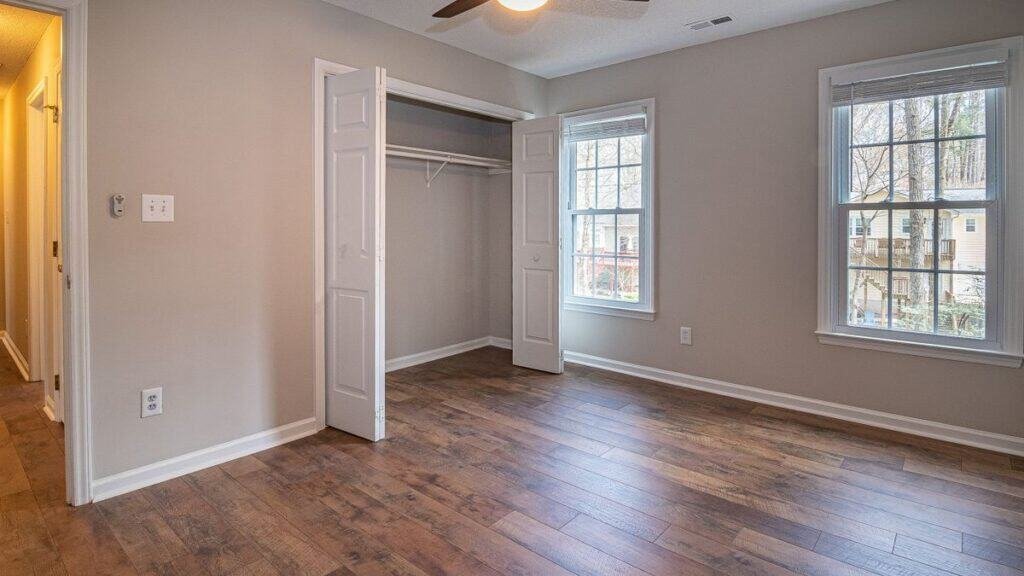
Somebody is going to write down what this apartment looked like on the day you got the keys.
Much of what you’re documenting here should look familiar: see what to check at an apartment viewing for the version of this checklist you should have already run before you signed.
If that somebody is only your landlord, then the sole record of the place on day one belongs to the person who will later decide how much of your deposit to give back. Their document was built to justify deductions. That is not a criticism of landlords — it is what the form is for.
Move-in day is also when unexpected charges tend to surface — see what the advertised rent leaves out so a fee doesn’t blindside you on top of the deposit.
You need your own record. An apartment move-in inspection is how you get one, and you have a narrow window to do it.
Search for help with this and you will find checklists published by property-management software companies, landlord associations, and property managers writing to other property managers. Read them closely and the order of priorities shows through: they protect the owner first. The advice is not wrong. It is just written from the other chair.
This is the same job done from your side.
Why one hour is worth this much attention
The security deposit is one of the larger sums you hand over at move-in, alongside first month’s rent and any fees your building charges. We broke those numbers down in our guide to first apartment move-in costs. If a landlord later keeps some or all of it, there is a sequence for getting your security deposit back.
Here is what makes documentation different from every other move-in task: the cost of skipping it does not arrive for a year or more. You find out when you move out, when the apartment is empty, when you have no way to prove that the scratch on the floor was there before you ever set a box down.
An hour on day one is the only chance you get to make that argument in advance.
The lease decides what that evidence has to stand up against. A clause saying the landlord is not responsible for anything, or one setting how much warning you are owed before someone can enter, shapes what this hour is protecting. The lease clauses that should make you pause covers both — and reading them is a before-you-sign job.
Do your apartment move-in inspection before the furniture comes in
Once boxes and furniture are in the rooms, half the floor and a good share of the walls are no longer visible, and nothing you cannot see can be photographed.
If you are moving yourself, walk the empty apartment before you carry anything in. If movers are coming, ask them to wait outside for twenty minutes, or do the walkthrough the evening before if you have the keys.
An empty apartment photographs cleanly. A full one does not.
What your state may require — and why you should not lean on it
Some states require your landlord to give you a written condition checklist. Others require nothing at all. The rules differ enough that a number in an article cannot tell you what applies to you.
Here is how to find out for your own state: search for your state’s landlord-tenant handbook, published by the state attorney general’s office or the state housing agency. Where a state publishes one, it is written in plain language. Then read your own lease, which may set requirements and deadlines even where state law does not.
Four examples show how much the ground shifts between states.
Washington ties the checklist directly to your deposit. State law says that no deposit may be collected unless the rental agreement is in writing and the landlord provides a written checklist or statement describing the condition, cleanliness, and existing damage to the unit, its fixtures, appliances, and furnishings. The checklist has to be signed and dated by both landlord and tenant, and you are entitled to a copy. If a landlord takes a deposit without providing one, they are liable to the tenant for the amount of the deposit. (Wash. Rev. Code § 59.18.260)
Michigan puts the duty on both sides and sets a clock. Where a security deposit is required, the landlord must hand you two blank copies of a commencement inventory checklist. You review it, note the condition of the property, and return one copy within seven days of taking possession — unless you and the landlord have agreed to complete it sooner, which the statute allows. The statute requires the form to carry this notice in bold type: “You should complete this checklist, noting the condition of the rental property, and return it to the landlord within 7 days after obtaining possession of the rental unit.” (Mich. Comp. Laws § 554.608)
New York gives you a right you have to claim. The landlord must offer you the opportunity to inspect the unit with them before you move in. If you request that inspection, the two of you sign a written agreement before occupancy that attests to the condition of the property and notes existing defects and damage — and the landlord cannot later keep deposit money for anything written in it. The protection is real, and it only exists if you ask. (N.Y. Gen. Oblig. Law § 7-108)
California puts the record-keeping duty on the landlord. For tenancies beginning on or after July 1, 2025, state law says the landlord “shall take photographs of the unit immediately before, or at the inception of, the tenancy.” The same law requires photographs after you move out as well — taken before any repairs or cleaning they intend to charge you for, and again once that work is done. (Cal. Civ. Code § 1950.5(g), added by AB 2801)
Those photographs are not private working material. When a California landlord deducts for repairs or cleaning, the supporting documentation has to come to you with the itemized statement — with two exceptions: deductions of $125 or less, and cases where you signed a waiver. Here is the part worth remembering. Even then you can ask. If you request the documentation within 14 days of receiving the itemized statement, the landlord has to provide it within 14 days of your request. Your own photographs are what let you check theirs. (Cal. Civ. Code § 1950.5(h))
Read those four again and notice what they have in common. In each one, the paperwork works for whoever understands it. The landlord fills out these forms every time a tenant turns over. For you it may be the first time.
And if your state requires nothing? Do all of this anyway. The record protects you whether or not a statute compelled anyone to create it.
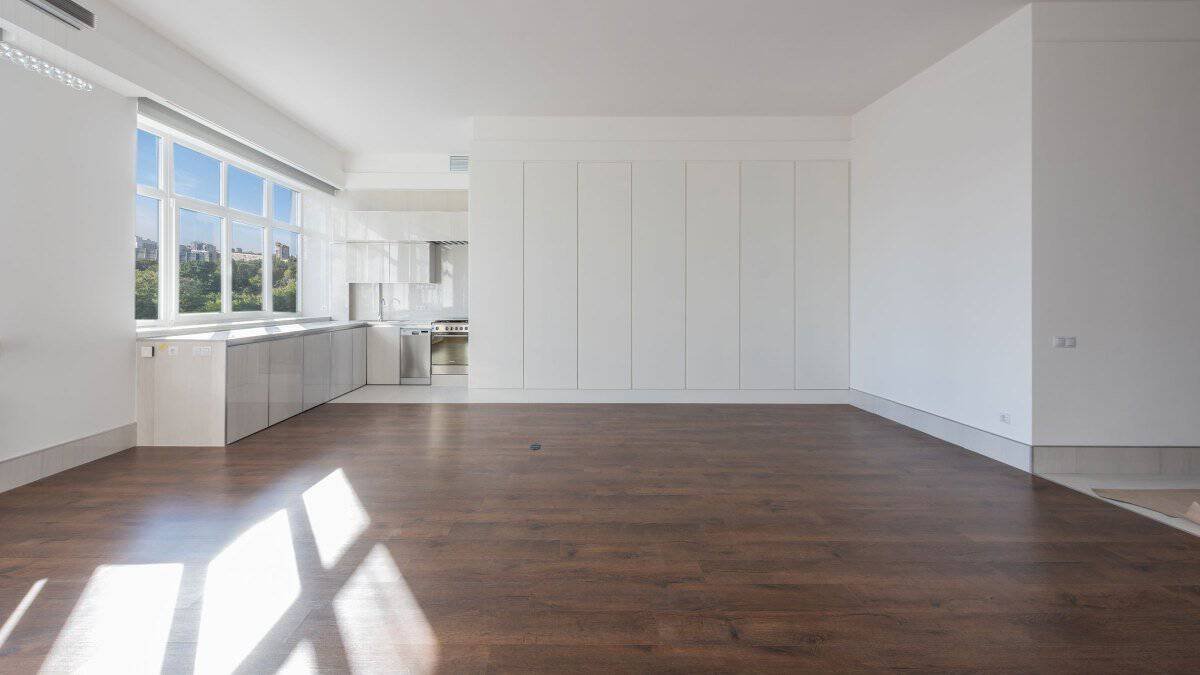
Work top to bottom, room by room
A systematic order is what stops things being missed. Pick a room, start at the ceiling, and work down:
- Ceiling and light fixtures — stains, cracks, water marks, missing covers, bulbs that do not light.
- Walls — holes, nail marks, scuffs, patched areas, peeling paint, marks behind where furniture stood.
- Windows and window coverings — cracked panes, torn screens, broken latches, blinds with missing slats, condensation between panes.
- Doors — chips, holes, hinges, locks, doors that do not close square.
- Flooring — scratches, burns, stains, worn patches, loose boards, gaps at the edges, carpet seams.
Then move to the next room and repeat. Do not skip closets, and do not skip the inside of cabinets.
Test things — do not just look at them
Looking catches cosmetic damage. Testing catches everything expensive.
- Taps — hot and cold, in every sink, shower, and bath. Watch how fast the water drains.
- Toilets — flush each one, and check for movement at the base.
- Lights — every switch, and note which switch does nothing.
- Windows — open, close, and lock each one.
- Locks — every key you were given, in every lock, including mailbox and any storage area.
- Smoke and carbon monoxide alarms — press the test button on each. If one does not sound, that is not a note for the checklist; that is a repair request to your landlord in writing, today.
- Appliances — the fridge should be cold and the freezer frozen, the oven should heat, every burner should light, and the dishwasher, washer, and dryer should each run a cycle. Run the garbage disposal with cold water going, and never put your hand into it, switched off or not. If you smell gas, see damaged wiring or exposed connections, or find water where it should not be, stop there. Do not switch anything on, and tell your landlord straight away.
- Heating and air conditioning — turn each on, even out of season, and listen.
Photograph anything that fails. A written note that the second burner does not light is worth more with an image behind it.
Be specific, because vague notes are not evidence
“Floor damaged” tells nobody anything and will not survive a disagreement a year from now.
“Three-inch scratch in the hardwood, roughly two feet from the window in the second bedroom” is a description someone can stand in the room and verify. That is what makes it useful.
Write the location, the size, and the kind of damage. Do that for every entry.
Photograph and film everything, with a date behind it
Photograph each note you write. Take a wide shot showing which room and which wall, then a close-up showing the damage itself, so the two together prove both what it is and where it is.
Then walk the whole apartment on video, narrating as you go — the room you are in, what you are pointing at. A video walkthrough takes ten minutes and captures things you did not think to write down. It matters more if nobody from the building met you at handover, because there was no one there to agree with you about the state of anything.
Email the photos to yourself the same day. That puts a dated copy somewhere other than your phone, so the record survives a lost or broken device. Be clear-eyed about what that date proves, though: it shows when you sent the email, not when the picture was taken. Send them immediately and the two are close enough to matter.
The mistake that undoes all of it
You can do a careful, thorough inspection and still lose most of its value by not returning the form — or by returning it too late.
In Michigan the window is seven days from taking possession, set by statute and printed in bold on the form itself, or sooner if you agreed to a shorter period. Elsewhere the deadline may come from your lease rather than from state law, and it can be shorter than you expect.
So before you start the walkthrough, find the deadline. Check the form for it, check your lease for it, and check your state’s handbook. Then return it the way the form or your lease actually tells you to. If it asks for a signed paper copy handed back, do that — an emailed photograph is not guaranteed to satisfy a requirement to return the copy itself, and this is not the place to improvise. Separately, keep your own proof that you did it: photograph the completed form before it leaves your hands, and email yourself a copy the same day.
Your own photographs and notes are still worth having on their own. But a checklist your landlord never received cannot do the specific job the law built it for.
Two things worth asking for
Ask what the last tenant was charged for. Michigan law explicitly entitles you to request a copy of the last termination inventory checklist, which shows the claims made against the previous tenant (Mich. Comp. Laws § 554.608). Elsewhere you have no such right — but asking costs nothing, and the answer tells you which parts of the apartment your landlord considers billable.
Ask for a copy of whatever you sign. If you sign a condition form and hand it back without keeping a copy, the only version in existence is theirs.
If your landlord gives you no form at all
Make your own. Nothing stops you documenting the unit on your own paper.
Then send it to them. Email the completed record with the photos attached, keep the sent message, and you have a dated document showing what you reported and when. That is most of the value of an official checklist, created without one.
Keep your copy somewhere that is not just your phone
Email the record and the photos to yourself, or put them in cloud storage. You need this material to survive a lost phone, a broken laptop, and a year or more of ordinary life.
Label it with the address and the move-in date so you can find it when it matters.
The other end: moving out
The same principle applies in reverse, and some states give you specific rights on the way out.
California gives you the right to ask for an inspection before the tenancy ends, and the landlord must tell you in writing that the right exists. That inspection happens no earlier than two weeks before you leave, and afterwards the landlord gives you an itemized statement of the repairs or cleaning they believe you should handle — which is your chance to fix things yourself before they come out of your deposit. The deposit itself, or what is left of it, is due back within 21 days. (Cal. Civ. Code § 1950.5(f), and the California Courts guide to security deposits)
New York gives a similar right to request an inspection before vacating, with 48 hours’ notice, held between two weeks and one week before the tenancy ends, followed by an itemized statement within fourteen days after you move out (N.Y. Gen. Oblig. Law § 7-108).
Florida’s security deposit statute sets no move-in documentation requirement, but it does put a clock on both sides after you leave. The landlord has 30 days after the rental agreement ends to give written notice of any claim against your deposit, and if they miss that deadline they forfeit the right to claim against the deposit at all. You then have 15 days to object in writing. If you do not object in time, the landlord may deduct what they claimed — but the statute says plainly that failing to object does not waive your right to seek damages in a separate action. A missed deadline costs you the easy route, not the argument. (Fla. Stat. § 83.49)
Your move-in record is what makes any of those objections stick.
Take the checklist with you
We built a condition report you can print and carry through the apartment — every room, the top-to-bottom order, and space to write the specific notes that hold up later. It is free, and you do not have to give us anything to download it.
Download the condition report (PDF, 8 pages, prints on letter paper)
If you want what we publish next, you can leave your email below. The download above does not need it.
One more thing
Documentation is the second time a landlord’s paperwork decides something about you. The first was the screening report they pulled before approving you, which has its own rules and its own errors — we covered what is in it and how to correct it in our guide to tenant screening report rights.
The pattern holds across both: the forms are routine for them and unfamiliar to you. Reading them carefully is how you close that gap. Both sit inside a longer sequence, and our First Apartment Guide walks it end to end.