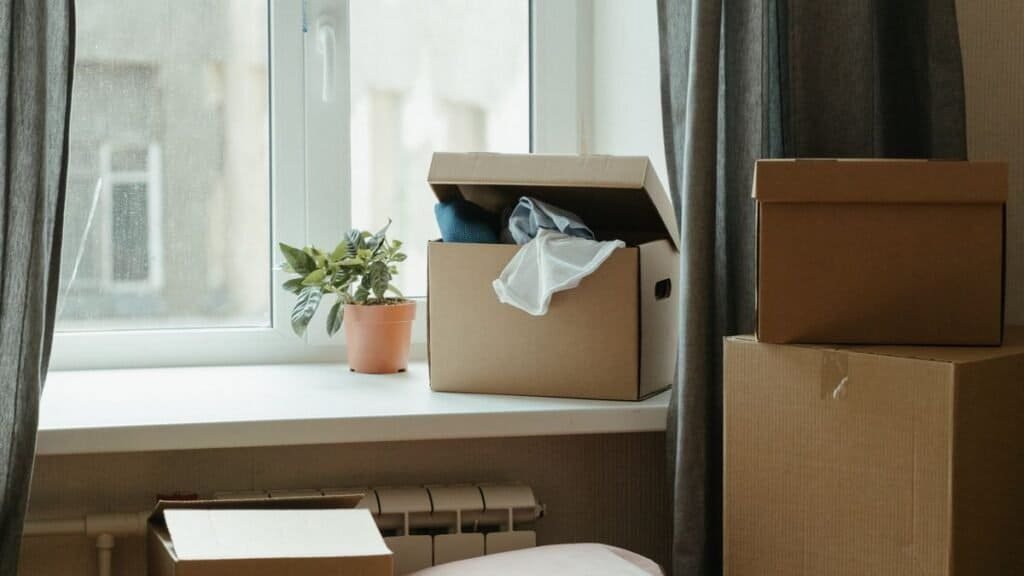
Search for a first apartment checklist and you will find lists of a hundred items or more, sorted by room, with a printable version at the bottom. They are not wrong, exactly. They are written as though you are furnishing a finished home on move-in day, with a truck outside and no ceiling on what you can spend.
That is not the situation. You are moving into a space you have never lived in, at the same time as the deposit, the first month of rent and the cost of the move itself. You do not yet know where the light is bad, where the storage runs out, which cupboard door sticks, or whether you are actually going to cook. Once you do know where it runs out, our guide to renter-friendly storage in a small apartment covers what actually adds space and what only moves the clutter around.
So this checklist runs the other way round. Three buckets: what you need before your first night, what can wait until you have lived there a few weeks, and what the other lists will tell you to buy that you should probably never buy at all. That last bucket is the one that saves you real money.
This guide assumes you already have the keys. If you are still going through applications, the thing that matters most at that stage is your tenant screening report and the rights that come with it.
Why the standard checklist costs you money
Three things go wrong with the hundred-item list.
It treats everything as equally urgent. A shower curtain and a decorative throw pillow sit on the same list with the same weight, so both get bought in the same rushed weekend, at full price, because the list said so.
It is written for an apartment nobody lives in. Your unit has its own quirks. Until you have spent a couple of weeks in it, you are guessing at what it needs, and guesses bought at retail are the things that end up unused in the back of a closet.
Check who published the one you are reading. Among the pages currently ranking for this search are a paper-towel brand, a tableware brand, two national retailers and a moving company. That does not automatically make their advice bad, but it does explain why nothing is ever in a skip-it column.
Here is the version with the skip-it column included.
Buy now: what you need before the first night
The test for this bucket is deliberately narrow. Can you sleep, wash, eat, and keep the place safe? Anything that does not serve one of those four moves to the next bucket.
Somewhere to sleep
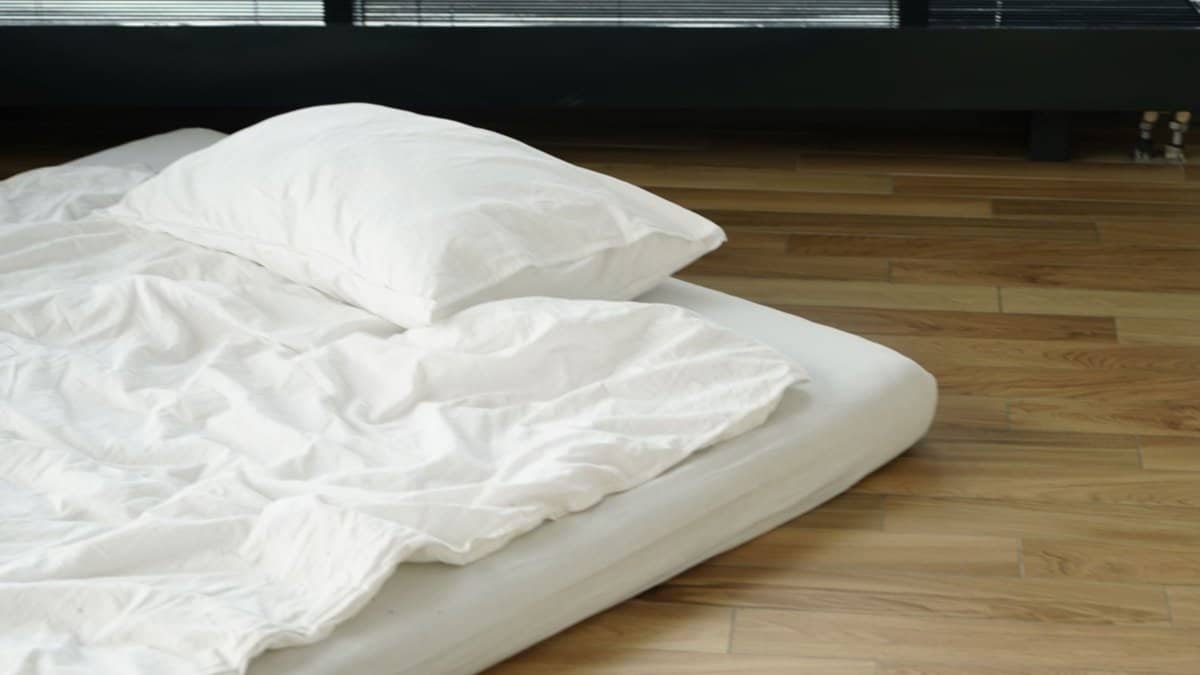
A mattress, two sets of sheets, a pillow for each person, and something over the window if the room faces a streetlight. That is the whole list.
If there is one thing in this entire guide worth spending properly on, it is the mattress and the pillows. It is the item you use for more hours a day than anything else you own, and a bad one is felt every single morning. The bed frame is a different matter, and it is the easiest thing in this section to delay or buy secondhand. One caution if the mattress is going straight onto the floor for a while: there is less airflow underneath it, which can allow moisture to build up, so lift and air it periodically rather than leaving it flat for months.
A working bathroom
Shower curtain and liner if the shower needs one, a towel each, toilet paper, hand soap, a toilet brush, and a plunger. The plunger belongs on the day-one list for the same reason a spare tire lives in the trunk. You do not want to be shopping for one at the moment you need it.
A bath mat, a soap dish and towels that match are next month.
Enough kitchen to feed yourself
Also deliberately short: one frying pan, one pot with a lid, one decent knife, a cutting board, and a plate, bowl, mug, glass and set of cutlery for each person. Add a can opener and something to drain pasta in.
That is enough to get real meals on the table from day one. The kitchen is where first-apartment budgets get eaten alive by single-purpose gadgets, which is exactly why this list is short. Buy it, cook on it for a few weeks, and let the gaps tell you what to add next. Our guide to stocking a first kitchen on a budget picks up exactly there: the few pieces that reward spending more, and the ones that are fine at the cheapest price you can find.
Clean and safe
A bin and bags, dish soap, an all-purpose cleaner, cloths or paper towel, and a broom or small vacuum depending on your floors.
Then two jobs for the day you get the keys. Both cost nothing and both are easy to lose in the noise of moving:
- Test every smoke and carbon monoxide alarm. Press the button. If one is dead, missing or chirping, that is a same-day problem, not a later problem. Responsibility for installing and maintaining alarms in a rental varies by state, so look up your own state rule rather than assuming it is handled or assuming it falls on you.
- Turn on every light and check every bulb. An apartment with three dead fixtures feels grim in a way that has nothing to do with the apartment. Bulbs are cheap and it is a fifteen-minute job on day one.
The five boring things nobody puts near the top
- A screwdriver set. Flat-pack furniture, cabinet handles, blinds and battery compartments all need one.
- A power strip or two, if the outlets are not where you need them. Buy one listed by a recognized safety testing laboratory, and keep heaters, air conditioners and other high-draw appliances off it. Overloaded strips and daisy-chained extension cords are a real fire risk, not a technicality.
- A flashlight, plus batteries for it and for the alarms.
- A basic first aid kit.
- A step stool with a proper top step or handrail. Changing a ceiling bulb while balanced on a dining chair is how a five-minute job turns into an injury.
While you are at it, find the fuse box and the water shut-off for your unit. In some buildings the main shut-off sits in a locked utility area a tenant cannot reach, so ask your landlord or building manager where it is and what you are meant to do if a pipe goes at two in the morning. Nobody puts that on a shopping list because it costs nothing, which is exactly why it gets skipped.
Buy later: the first month
Everything in this bucket gets better if you wait, because living in the place tells you things a floor plan cannot.
Storage is the big one. Buying bins, shelves and organizers before you have unpacked is money spent on a guess. You do not yet know what will not fit, and storage bought blind is storage bought in the wrong shape. Unpack first, live with the mess for a week, then buy for the specific problem that is annoying you.
Furniture beyond the bed. Sit in the empty room. Measure the doorway, the stairwell and the lift before you buy anything large, because the thing that will not go up the stairs is not a bargain. Dining tables, desks and other hard furniture are where a secondhand budget stretches furthest. Upholstered sofas are a different case, for reasons covered further down.
Lamps and curtains. Wait until you have seen the room in the evening. If the room has one ceiling fixture and nothing else, a single well-placed lamp will change it more than most furniture would. Curtains need real measurements, not estimates.
Small appliances. Let your actual cooking habits appear first. Buy a blender, an air fryer and a stand mixer in week one and you will discover in week six which of the three you actually use.
A desk and chair, once you know where in the apartment you genuinely end up working, which may not be where you assumed.
Decor comes last, and that is not a criticism. The things that make a place feel like yours are the point of having your own place. Buying them in the second month rather than the first costs you nothing except a few weeks of blank walls, and by then you will know what the room actually needs.
Buy never, or at least not for this apartment
- Apartment starter bundles. The convenience is real, but you pay for filler items you would never have chosen, and a bundle is only as good as its weakest piece.
- Matching furniture sets bought all at once. They lock in one decision about a room you have not lived in, and they are the hardest thing to move on from.
- Single-purpose kitchen gadgets. Anything that does one job a knife or a pan already does.
- A second set of everything for guests. Guests can use your plates.
- Anything that needs drilling, mounting or adhesive before you have read your lease. Fixings that damage walls can come straight back out of your deposit, which makes a cheap shelf an expensive one. Once you have read it, our guide to renter-friendly upgrades and what a lease permits covers what is safe to put up and what is not.
- Cleaning equipment sized for a house. A full-size machine for a small unit is mostly storage you do not have.
Some of these you will eventually want, and that is fine. The question is only whether you want them in the same fortnight your bank balance is at its lowest point in years.
Three ways to pay less that the checklists leave out
Look for free before you look for cheap. Local Buy Nothing groups, neighborhood giveaway pages and university move-out weeks are full of furniture that is leaving a home whether anyone claims it or not. It is worth an hour of your time before you spend anything, and it is the only suggestion in this article that cannot earn anyone a commission.
Know where secondhand is fine and where it is not. Bookcases, desks, dining chairs, dressers, side tables, mirrors, hand tools and most kitchen basics are all fine used. Take more care with mattresses and upholstered furniture. The specific risk is bed bugs, which travel home in used beds and couches, and you cannot see inside a cushion. That does not make used upholstery a bad idea by default. It means inspecting seams, folds and the underside carefully in good light before it comes through your door, and walking away if anything looks off. With used electrical items the problem is simpler: you usually cannot test them properly at a kerbside, so treat anything you cannot plug in and try as a gamble rather than a bargain.
Keep a waiting list instead of a shopping list. When you notice something missing, write it down rather than buying it. Look at the list a few weeks later. Some will have become obviously necessary. Others will have quietly solved themselves. The ones still on the list are the ones worth buying properly.
What all of this actually costs
Setup spending does not arrive on its own. It lands in the same few weeks as the deposit, the first month of rent, any application and administrative fees, and the cost of the move itself, which is why the first apartment feels expensive in a way the second one does not.
If you have not put a number on that yet, do it before you start buying. Our first apartment move-in cost guide includes a free calculator that adds up what you need to get the keys, what the move costs, and what basic setup adds on top, so you can see the whole figure in one place instead of discovering it one card payment at a time.
Your first week, in order
- Day you get the keys. Test the alarms, check every bulb, find the fuse box and the water shut-off, and set up somewhere to sleep and a usable bathroom. Before the boxes come open, document the condition you were handed — that record is what your deposit rests on months later.
- First few days. The short kitchen list and the cleaning basics, so you can feed yourself and keep the place in order.
- Weeks two to four. Live in it. Keep the waiting list. Notice where the light is bad, where things pile up, and what you reach for that is not there.
- After that. Buy one category at a time, in the order the apartment is asking for, starting with storage now that you know its shape.
The goal was never to spend as little as possible. A miserable apartment full of things that fell apart is not a win. The goal is to spend where it changes your daily life, delay what you cannot judge yet, and skip what was only ever on the list because somebody was selling it. If you are earlier than the shopping stage, our First Apartment Guide covers the whole sequence in order.