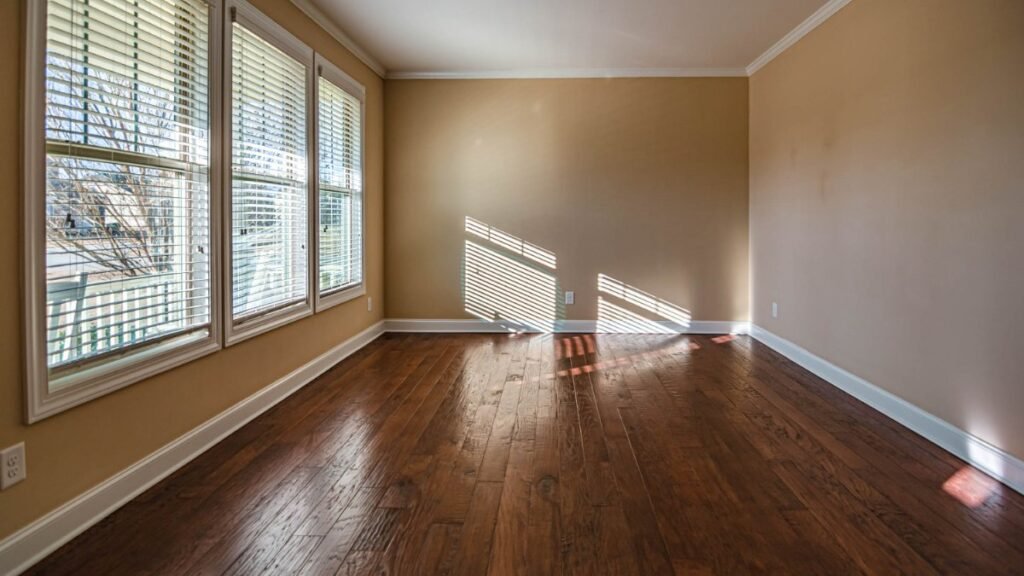
If your landlord’s move-out statement lists a charge for “carpet replacement” or “wall damage,” the first question isn’t whether the carpet looks worn or the wall has a mark on it. It’s whether what you’re looking at is ordinary wear and tear — which generally cannot be charged against a security deposit — or damage, which may be chargeable under the applicable law. The distinction can be easy to lose in a move-out charge, and getting it wrong can put a significant part of your security deposit at stake.
This guide gives you the practical test to apply room by room, and the one concept — useful life and depreciation — that can matter just as much as the damage itself when a landlord charges you for a replacement.
What “normal wear and tear” actually means
State and local laws use different wording, but security-deposit rules distinguish ordinary wear and tear from tenant-caused damage. Washington, D.C.’s code states it about as plainly as any jurisdiction does, defining ordinary wear and tear as “deterioration that results from the intended use of a dwelling unit, including breakage or malfunction due to age or deteriorated condition” — and specifically excluding “deterioration that results from negligence, carelessness, accident, or abuse of the unit… by the tenant, immediate family member, or a guest.”
Strip out the legal phrasing and the test is simple: did this happen because someone lived here normally, or because someone did something to it? A carpet that’s flattened and dull after three years of foot traffic wore out. A carpet with a burn hole or a pet-stain that’s soaked through the pad was damaged. Same object, two different outcomes, because the cause is different.
California’s security-deposit statute draws the line from the landlord’s side: claims for repair work are limited to a reasonable amount necessary to restore the premises to their condition at the start of the tenancy, exclusive of ordinary wear and tear. The statute also bars claims against the tenant or security for preexisting conditions and for ordinary wear and tear, including cumulative wear that developed over one or more tenancies. Wear and tear that was already there when you moved in, or that simply kept accumulating while you lived there, isn’t automatically yours to pay for just because you were the one living there when the lease ended.
The practical factors that separate wear from damage
Once you’re standing in a specific room looking at a specific mark, “was this caused by normal use or something else” isn’t always obvious just by looking. Three questions do most of the work:
- Cause. Did this result from routine daily use — walking, sitting, opening and closing, temperature and humidity — or from a specific event: a spill, an impact, a pet, a fire, neglect (like never reporting a leak until it rotted a floor)?
- How serious is it, and what caused it? A loose cabinet hinge after years of normal use may be ordinary wear. A cabinet door ripped off its hinges because of an impact is much more likely to be damage.
- Whether it was preventable with ordinary care. Nail holes from hanging a couple of pictures are wear. A dozen fist-sized holes in drywall are damage. A faded patch of carpet where furniture sat for years is wear. A hole burned by a cigarette is damage.
If a charge meets all three of these — it resulted from normal use, it’s minor, and there was nothing you could reasonably have done differently — it deserves closer scrutiny before you accept it as a legitimate damage charge.
Age, useful life, and depreciation: why “it needs replacing” doesn’t mean you pay full price
The item’s age can matter just as much as the damage itself when a replacement is being charged: almost everything in a rental has an expected useful life, and a full-price replacement charge for something already most of the way through that life, before you ever moved in, deserves a closer look.
One useful federal reference is Appendix 5D of HUD’s Special Claims guidance, which provides a sample life-expectancy chart for items in the HUD-assisted housing programs that guidance covers. It’s worth being precise about what this document is and isn’t: it is guidance used for certain HUD-assisted housing programs, not a nationwide depreciation law that binds private-market landlords or leases. Because the schedule provides specific life-expectancy figures for common rental items, it can be useful as a reference when evaluating whether a replacement charge accounts for the item’s age.
For example, HUD’s sample chart lists these life expectancies for family housing:
- Carpet: 5 years
- Interior wall paint (flat finish): 3 years; enamel/semi-gloss: 5 years
- Window blinds and shades: 3 years
- Refrigerators and water heaters: 10 years
- Ranges/stoves: 20 years
For example, as an illustration of how a useful-life calculation can work: suppose the carpet was installed 4 years before you moved in, leaving 1 year of its 5-year expected life remaining — about 20% of its value. If you caused damage requiring replacement in year 1 of your tenancy, that remaining 20% is roughly the ceiling on what the landlord could fairly claim, not the full replacement cost. By year 2, the carpet had already exceeded its 5-year schedule entirely, so its depreciated value was effectively $0 — meaning a full-replacement charge would be even harder to justify at that point. Under that HUD methodology, the landlord would not charge the tenant the full replacement cost; the claim would be limited to whatever fraction of the carpet’s expected life actually remained when the damage occurred, which can be zero. Other jurisdictions may use different rules or methods. In practice: if the landlord cannot explain the item’s age or the basis for the replacement charge, ask for that information before accepting the amount.
Age does not automatically turn damage into wear. An old carpet can still be damaged by a burn, a large stain, or a tear. The age matters when calculating the amount of a legitimate damage claim, but the first question is still whether the condition is ordinary wear or tenant-caused damage.
Room by room: wear or damage?
Walls and paint
Wear: small nail holes from hanging pictures, minor scuffs near light switches, slight color fading from sunlight, faint marks from furniture touching the wall.
Damage: large holes, substantial crayon or marker staining that cannot be removed through ordinary cleaning, unauthorized paint colors left without being restored where restoration is the tenant’s responsibility, or holes from wall-mounted TVs or shelving that were not properly repaired.
Flooring and carpet
Wear: general flattening or thinning of carpet pile from foot traffic, minor scuffs on hardwood or vinyl, or minor surface wear consistent with ordinary use.
Damage: burns, rips, pet stains or odors caused by the tenant’s household or guests, water damage caused by a tenant’s spill that was not promptly addressed, or deep gouges in hardwood caused by dragging furniture.
Doors, cabinets, and hardware
Wear: loose hinges or handles after years of normal opening and closing, minor finish wear, or other deterioration consistent with age and ordinary use.
Damage: cracked or broken doors, missing hardware, holes punched through hollow-core doors, cabinet doors pulled off their hinges.
Bathroom
Wear: minor grout discoloration, slight caulk shrinkage, small hard-water spotting on fixtures.
Damage: cracked tile or tub caused by an impact, broken fixtures caused by tenant misuse, or damage that resulted from a tenant-caused leak that was not promptly addressed.
Kitchen and appliances
Wear: minor scratches on an oven or fridge exterior, a stove that’s simply reached the end of a normal service life, worn caulk around a sink.
Damage: an appliance damaged through misuse or neglect, missing appliance parts, or a cracked stovetop caused by an impact.
How to evaluate a charge you think is unfair
If you decide to push back on a charge, here’s how to evaluate it — and our full guide to disputing a deposit charge and getting your money back covers the next steps once you have.
- Get the itemized statement required by your state’s law, if applicable. If the landlord gives you only a vague line like “damages — $600,” check whether your state or local law requires more detail.
- Ask how old the item was. If it was near or past its useful life (see the schedule above), a full-replacement charge deserves more scrutiny.
- If a targeted repair would reasonably restore the damaged item, ask why the landlord charged for full replacement instead. Whether a landlord can charge for replacement, and how the amount is calculated, depends on the applicable law and circumstances. Also watch for an upgrade disguised as a repair — a damage charge should not quietly leave the landlord with something substantially newer or better than what the tenant damaged.
- Ask what documentation supports the charge. Depending on your state’s law, the landlord may have to provide an itemized statement, estimates, invoices, receipts, or other supporting documentation.
- Compare it against your move-in documentation. This is where the next section comes in — and why it matters before you’ve even moved out.
The documentation that actually protects you
Everything above is easier to prove with paper (or photos) than with memory. At move-in: photograph or video every room, including close-ups of existing scuffs, stains, damage, and wear. Keep the original files and, where your phone or app provides a visible date, preserve that information with the files. If your landlord uses a move-in condition checklist, fill it out honestly and keep a copy — noting existing wear protects you from being charged for damage you never caused. At move-out, repeat the same walkthrough and photograph the same spots. If a landlord’s claim describes something you photographed as absent, or minor, at move-in, that photo is your strongest piece of evidence. If your state gives you a specific deadline or procedure for requesting a move-in or move-out inspection, follow that procedure rather than relying only on your own photos.
How this varies by state
The wear-versus-damage principle is close to universal, but the exact statutory language differs, and it’s worth knowing your own state’s version isn’t necessarily identical to these. A few examples, not an exhaustive list:
- California: Civil Code § 1950.5(e)(2) bars landlords from charging for ordinary wear and tear, including wear that built up across more than one tenancy, and limits repair charges to what’s needed to restore the unit “exclusive of ordinary wear and tear.”
- Washington, D.C.: D.C. Code § 42-3502.17 defines ordinary wear and tear directly, and specifically protects tenants from being required to “make substantial repairs, replace obsolete materials, or fix other defects” absent their own negligence or fault. D.C. law also has specific notice and dispute procedures for move-out charges, so local rules can matter as much as the wear-versus-damage distinction itself.
- Maryland: Real Property § 8-203(f)(1)(i) allows a landlord to withhold a security deposit for damage caused by the tenant and certain others when the damage is in excess of ordinary wear and tear, and gives tenants specific rights concerning move-out inspections and documentation. (The Maryland People’s Law Library, linked above, illustrates ordinary wear and tear with examples like small scratches, marks, or scuffs from moving furniture or everyday living — that’s explanatory guidance, not the statute’s own wording.)
If your state isn’t listed here, use the examples above as a practical way to organize the question, but check your own state’s or city’s tenant law before relying on a specific rule, deadline, documentation requirement, or method for calculating a charge.
If you’ve already received a move-out statement and you’re trying to figure out what to do next — how to write a dispute letter, what deadlines apply, and how to actually get money back — that’s covered in our full Security Deposit Guide. This page is about the one question that has to come first: is what you’re being charged for actually damage at all?